
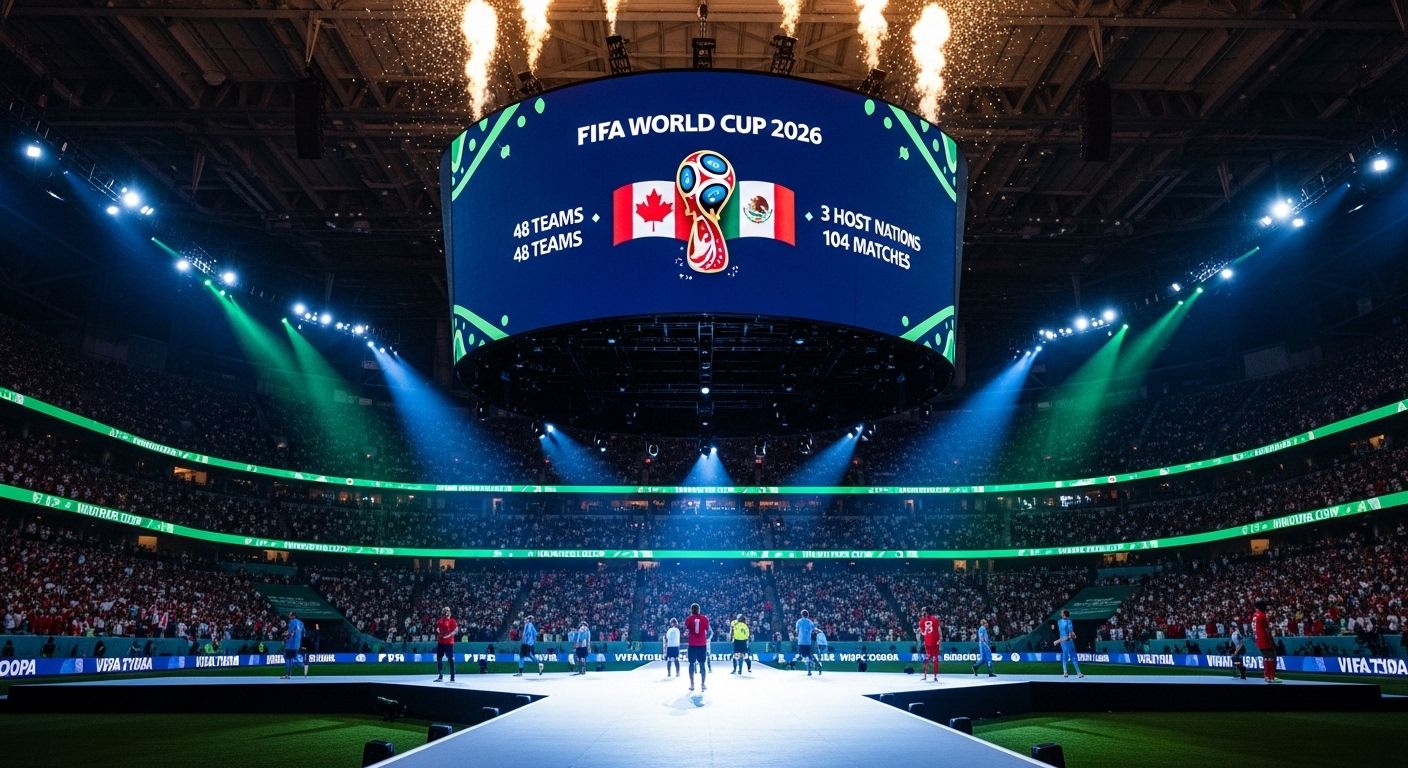
The Great Expansion: How 104 Matches and 48 Nations Redefine the World Cup
Explore how the 2026 World Cup expansion to 48 nations, 104 matches, and three host countries is fundamentally changing tactical and logistical tournament play.
The Mathematics of Chaos
The 2026 FIFA World Cup marks a transition from 32 to 48 teams, introducing a 'Round of 32' and a 'third-place loophole' where the eight best third-placed teams qualify. Analysts expect a shift between cautious opening matches and high-stakes, volatile final group fixtures.
The Tactical 'Squad Management' Era
The tournament now requires eight matches to reach the final, necessitating a departure from relying on a static 'Starting XI.' Success will hinge on 'vertical depth' and the ability of managers to rotate squads effectively while managing travel fatigue across vast distances.
A Continent Under the Microscope
Spanning 16 cities across three nations, this is the most complex logistical event in sports history. Security preparations focus on the sustained, multi-city nature of the operation, managing international borders and diverse time zones over 39 days.
The Future of Competition
While traditional favorites like France, England, and Argentina remain favored, the expanded field invites aggressive, transition-heavy football from mid-tier nations. The eventual winner will likely be the team that best adapts to the new format's rotation demands and geographical challenges.